The Ultimate Smart Ring Buying Guide: Real Talk on What Actually Works
I spent years as a product tester in the wearable tech space, and if there is one thing I have learned, it is that a smart ring is the most personal piece of tech you will ever own. Unlike a phone that sits in your pocket or a watch that you can loosen, a ring is literally part of your skeletal structure for 23 hours a day. I have had rings that made my finger swell during a summer hike and others that felt so light I panicked thinking I had lost them.
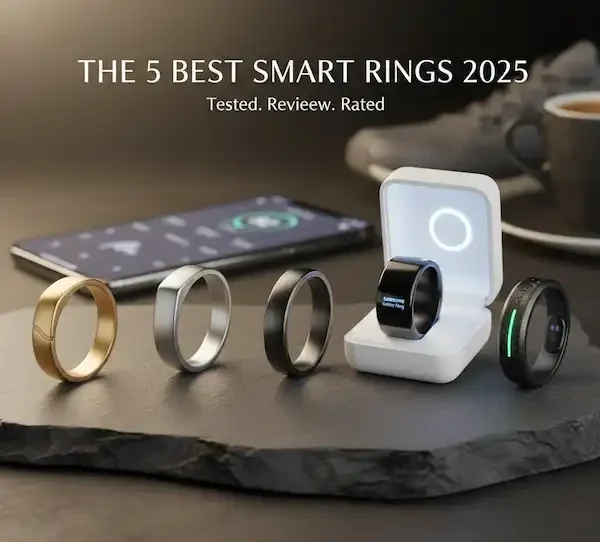
When you dive into a Smart Ring Buying Guide, you are usually met with clinical specs. But I want to tell you what it is actually like to live with these things. I have worn the Oura, the Samsung Galaxy Ring, and the Ultrahuman simultaneously—yes, I looked like a tech-obsessed wizard—to see which ones actually survive a week of real life.
The Android vs. iPhone Reality Check
Let’s get the biggest hurdle out of the way. In addition to this smart ring buying guide, your phone choice basically dictates your ring choice.
If you are an iPhone user, the Apple Watch is king, but if you hate the “wrist computer” look, the Oura Ring 4 is your best bet. It plays beautifully with Apple Health. On the flip side, if you are firmly in the Samsung ecosystem, the Galaxy Ring is a no-brainer. I tried using the Galaxy Ring with a non-Samsung Android phone, and while it works, you lose the “Energy Score” and the snore tracking. It feels like buying a sports car but being locked into second gear.
For those who switch between platforms or just want a “neutral” device, the RingConn Gen 2 or the Ultrahuman Ring Air are fantastic. They don’t care if you have a Pixel or an iPhone 16. In my experience, the Ultrahuman app is a bit more “data-heavy” (it looks like a cockpit), while RingConn is simpler and more approachable for someone who just wants to know if they slept well.
Why Your Knuckle is the Boss
The biggest mistake people make—and I made this too—is ordering based on their standard wedding band size. Do not do that. Smart rings have little bumps on the inside (the sensors) that change the fit.
Every reputable brand will send you a plastic sizing kit first. Wear the plastic ring for at least 24 hours. Your fingers swell when you drink coffee, when you workout, and especially when you sleep. I once sized myself in a cold office and found the ring almost impossible to remove after a salty dinner and a warm night’s sleep. A proper Smart Ring Buying Guide must emphasize: if it doesn’t clear your knuckle easily, you will end up never wearing it.
The Subscription Trap
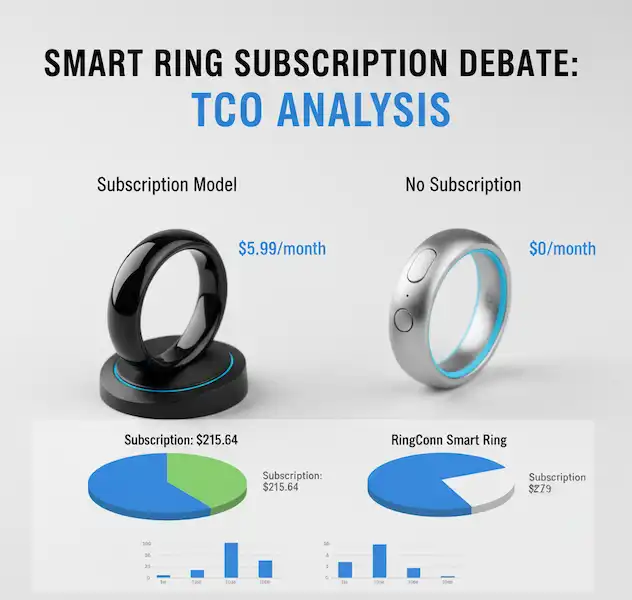
This is the industry’s “dirty secret.” You pay $300-$500 for a ring, and then some brands ask for $6 a month just to see your own data.
- Oura: They are the gold standard for accuracy, but they have a monthly fee. If you stop paying, the ring becomes a very expensive, dumb titanium band.
- Samsung & RingConn: Currently, these are subscription-free. You buy the hardware, you own the data.
As someone who has worked behind the scenes with these developers, I know that maintaining cloud servers for millions of users is expensive, which is how they justify the fee. But as a consumer, I much prefer the “one and done” pricing of the RingConn Gen 2.
Accuracy: Sleep vs. Sports
Here is some smart ring buying guide insider knowledge: smart rings are incredible at tracking things while you are still, and mediocre at tracking things while you are moving.
Because the skin on your finger is thinner than your wrist, a ring can get a much cleaner heart rate and blood oxygen (SpO2) reading during sleep. My Oura Ring 4 consistently matches my medical-grade sleep study results within a 5% margin. However, if you are a crossfitter or a weightlifter, a smart ring will frustrate you. When you grip a barbell, the ring shifts, the sensors lose contact, and the hard metal can actually be dangerous (look up “ring avulsion” if you want a scare).
If your goal is “Ready for a Marathon,” get a Garmin. If your goal is “Why am I so tired every Tuesday?” follow this Smart Ring Buying Guide to find a sleep-focused model.
Battery Life and the “Charging Anxiety”
The manufacturers claim 7 days. In reality? You get about 4 or 5.
The sensors that track your heart rate use “green light” PPG technology. If you have the ring set to track your heart rate every minute, it eats the battery. One thing I love about the newer models like the RingConn is the portable charging case. It looks like an AirPod case. You just drop the ring in while you shower, and it stays topped up. I found this way more convenient than the Oura’s “puck” charger, which I always seem to leave in hotel rooms.
Durability: The Scratched Reality
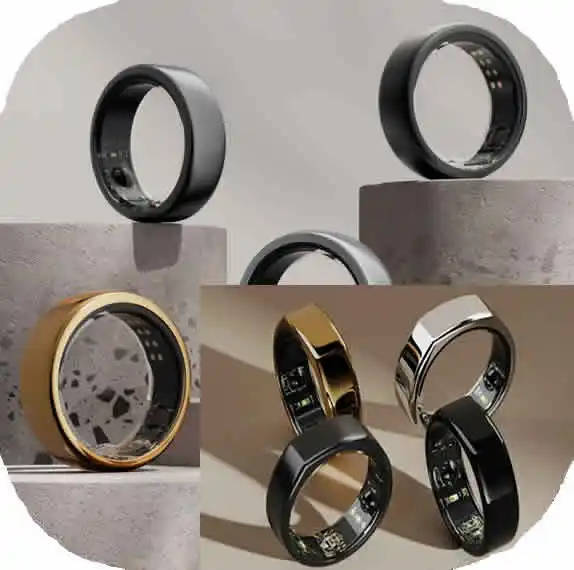
Titanium is tough, but the coatings are not. Within three weeks of wearing a “Stealth Black” ring, I had silver scratches from opening door handles and carrying groceries. If you are OCD about your jewelry looking pristine, get the Silver or Gold finishes. The “Brushed” or “Matte” finishes show “battle scars” almost immediately.
Smart Ring Buying Guide: Technical Specs At A Glance
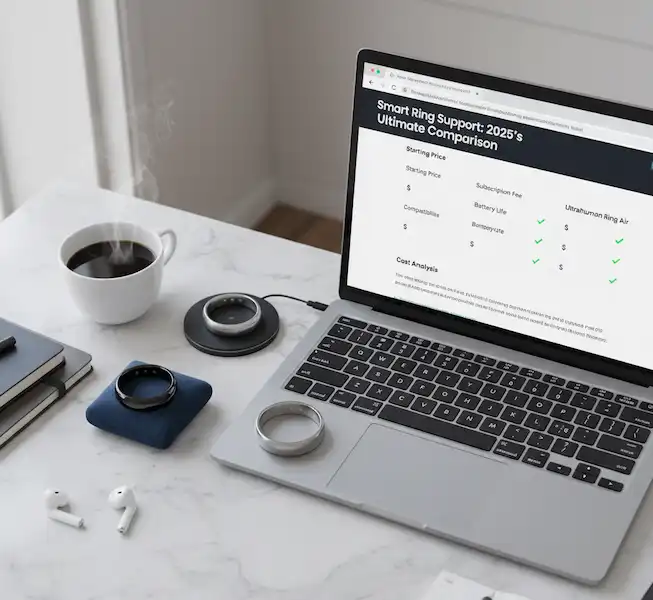
| Feature | Oura Ring 4 | Samsung Galaxy Ring | RingConn Gen 2 | Ultrahuman Air |
| Best For | Overall Accuracy | Samsung Users | Battery & Value | Bio-hackers |
| Subscription | $5.99/mo | None | None | None |
| Material | Titanium | Titanium | Titanium | Titanium |
| Waterproof | 100m | 100m | 100m | 100m |
| Weight | 4-6g | 2-3g | 2-3g | 2.4g |
Features You Actually Need (and Some You Don’t)
- HRV (Heart Rate Variability): This is the most important metric. It tells you if your nervous system is stressed. If my HRV is low, I skip the gym. It is the best “burnout” detector I have found.
- Skin Temperature: This is how my ring told me I had COVID two days before I felt symptoms. A sudden spike in night-time temperature is a huge red flag for illness.
- NFC Payments: Some rings (like McLear) allow you to pay for coffee with a tap. Most “health” rings do not have this because the battery can’t handle both health sensors and a payment chip. Decide if you want a digital wallet or a health coach.
- Haptic Feedback: Most rings do not vibrate. If you want a silent alarm on your finger, you are mostly out of luck. The tech is just too small to fit a vibration motor in there without making the ring look like a chunky piece of costume jewelry.
My Personal Recommendation
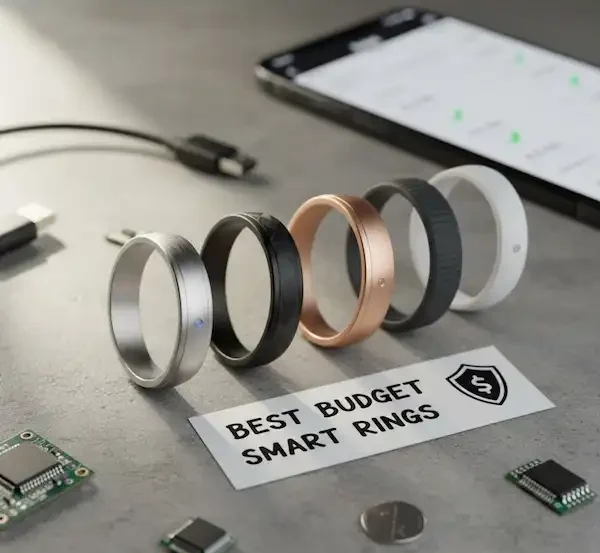
If you are just starting out, don’t drop $500. Look at the RingConn Gen 2 or the Ultrahuman Ring Air. They offer a complete experience without the “membership tax.” If you are an athlete who needs to know exactly how your recovery is trending and you don’t mind the monthly bill, the Oura Ring 4 is still the industry leader for a reason—their algorithms are just more mature.
For my Android friends, the Samsung Galaxy Ring is the most comfortable thing I have ever put on my finger. It’s concave, meaning the middle is dipped in, so it doesn’t scratch as easily. It’s a brilliant piece of engineering, even if it locks you into their ecosystem.
Living with the Data
The biggest trap of any Smart Ring Buying Guide is thinking the ring will change your life. It won’t. It just gives you the data to change it yourself. I realized after a month of tracking that my “one glass of wine” at 9 PM was ruining my deep sleep until 3 AM. I didn’t need a doctor to tell me; I saw the red lines on my app. That is the power of these devices.
Additional Thoughts for Your Journey
Choosing a ring isn’t just about the tech; it’s about whether you want to be a “data person.” If seeing a “Sleep Score” of 60 makes you feel anxious and ruins your day, this might not be for you. But if you view it as a dashboard for your body, it is the most non-intrusive way to stay healthy.
When you use this Smart Ring Buying Guide, remember that the “best” ring is the one that stays on your finger. If it’s too thick, too ugly, or too annoying to charge, it will end up in a drawer. Go for comfort first, ecosystem second, and features third.
FAQ – Common Questions from the Finger-Tech Frontier
Can I wear a smart ring while lifting weights?
I wouldn’t. Beyond the risk of scratching the ring, there is a physical safety issue called “ring avulsion” where the ring can catch on the bar. Most of us just slip it into a pocket or leave it in the locker during a heavy lifting session.
Do I need to wear it on my index finger?
Most brands suggest the index finger for the best accuracy because the blood vessels are closer to the surface. However, I have worn mine on my ring finger for months with negligible differences. Just make sure it is snug.
Is the data private?
This is a big one. Companies like Oura have very high standards, but always check if they sell “anonymized” data to third parties. If you are concerned, look for companies based in regions with strict data laws like the EU.
How long do they last before the battery dies forever?
Realistically, these are 2-3 year devices. Because the batteries are so tiny, they eventually lose their ability to hold a charge. It is the nature of the beast with miniaturized tech.
Can I swim with it?
Most are rated for 100m. I have worn mine in the ocean, in pools, and in saunas without a hitch. Just make sure to rinse the salt or chlorine off with fresh water afterward to protect the finish.
Additional Helpful Links
- For more in-depth reviews on specific models, you can check out resources like PCMag’s Wearable Reviews or The Verge’s Health Tech section, which often do deep dives into the sensor accuracy of these devices.
- What are the benefits of a smart ring?
- This is an interesting read: Smart Ring or Smartwatch – Which is Best Heart Rate Monitor
- For a comparison of popular smart ring, check out this link – Comparison of Popular Smart Rings